
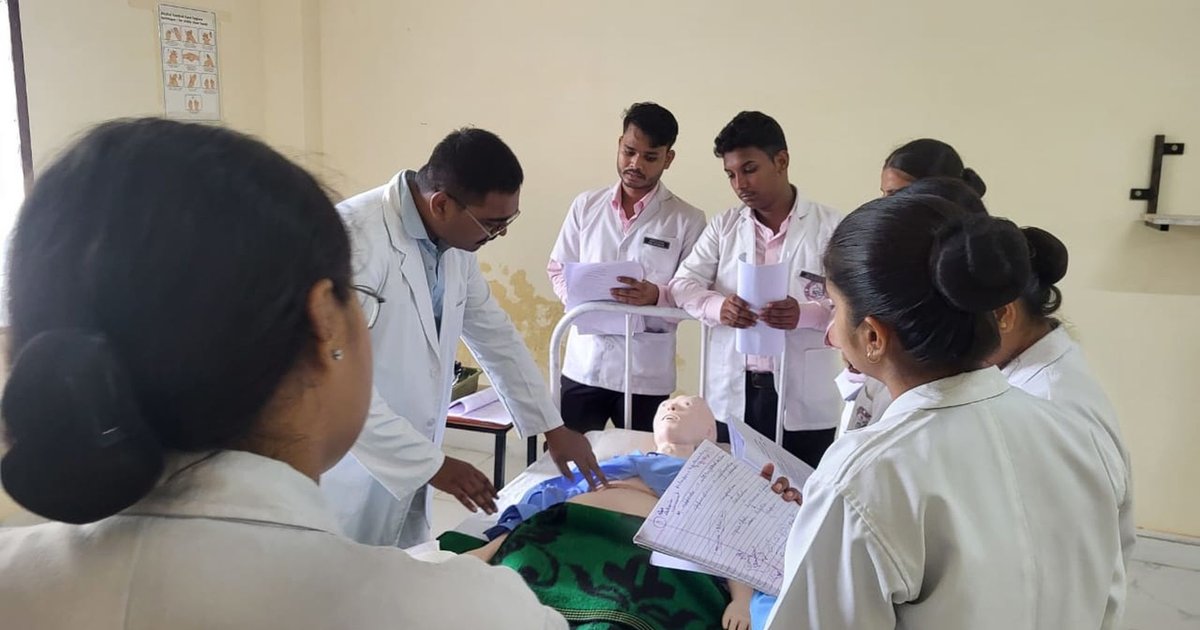
Pursuing BSc nursing in Australia is a well-defined route for Indian students who want to build a nursing career backed by a globally recognised qualification. Australia's healthcare system is one of the most advanced in the world, and its nursing education programs combine rigorous clinical training with strong employment pathways upon graduation. For students from Kerala and across India, a BSc nursing degree from an Australian university can lead directly to AHPRA registration, employer-sponsored visas, and permanent residency. This guide covers everything you need to know about eligibility, top universities, tuition costs, and the visa process for 2026.
Key Takeaways
- Indian students can enrol in BSc nursing in Australia with 12th Science (Biology), IELTS 6.5 or OET Grade B, and a valid student visa (subclass 500).
- Annual tuition fees range from AUD 26,000 to AUD 40,000 per year across Australian universities.
- After completing BSc nursing in Australia, graduates can register with AHPRA and pursue employer-sponsored or skilled migration visas for permanent residency.
Why Study BSc Nursing in Australia as an Indian Student?
Australia offers Indian nursing students a rare combination of world-class clinical training, strong graduate employment prospects, and a clear pathway to permanent residency. A BSc nursing degree from an Australian university is internationally recognised and directly accepted by AHPRA for nursing registration, removing one of the biggest hurdles Indian-qualified nurses face when migrating.
The Australian nursing job market is experiencing a sustained shortage, particularly in regional hospitals, aged care, and mental health settings. This creates significant employment demand for graduates, including those on post-study work visas. Indian nursing students who complete their degree in Australia benefit from three to four years of local clinical experience, English language immersion, and direct employer relationships built during placements. For students considering a longer academic path, a BSc can also serve as the foundation for a master of nursing in Australia, which opens additional specialist career tracks and migration pathways.
Entry Requirements for Indian Students
Meeting the entry requirements for BSc nursing in Australia requires preparation across three areas: academic qualifications, English proficiency, and visa eligibility. Starting the process at least 12 months before your intended intake date is strongly recommended. Indian students should also verify whether their Class 12 Biology and Chemistry subjects satisfy the science prerequisites of their target university, as some institutions require bridging units for students whose secondary curriculum did not cover these subjects at the required level.
Australian universities typically require completion of Class 12 with Biology, Physics, and Chemistry, along with a competitive academic record. English proficiency requirements for undergraduate nursing are generally lower than postgraduate programs: IELTS Academic 6.5 overall with no band below 6.0 is widely accepted, and OET Grade B in all four components is also recognised. Some universities require a specific prerequisite Biology or Health Science unit if it was not covered in your 12th standard curriculum. The Australian Nursing and Midwifery Accreditation Council (ANMAC) sets the accreditation standards that ensure your Australian degree is recognised for AHPRA registration. Confirming that your chosen university holds ANMAC accreditation before applying is a critical step that One Doorway International's counsellors verify on your behalf.
Top Universities for BSc Nursing in Australia
Australian universities offering accredited BSc nursing programs range from Group of Eight research institutions to regional universities with strong employer partnerships. Choosing the right institution depends on your budget, preferred location, and career goals.
Key universities to consider for BSc nursing in Australia in 2026:
- University of Melbourne: AUD 38,000 to AUD 40,000 per year. Highly regarded research environment with extensive metropolitan clinical placements.
- University of Sydney: AUD 36,000 to AUD 38,000 per year. Strong graduate employment outcomes and broad clinical specialisation options.
- Monash University: AUD 34,000 to AUD 36,000 per year. Excellent simulation facilities and active alumni network across Melbourne hospitals.
- Deakin University: AUD 30,000 to AUD 32,000 per year. Flexible delivery options with a strong focus on rural and community nursing.
- Charles Darwin University: AUD 26,000 to AUD 28,000 per year. DAMA-eligible regional location with direct employer-sponsored visa pathways.
All five universities hold current ANMAC accreditation, ensuring your degree qualifies you for AHPRA registration upon graduation. One Doorway International's counsellors can advise on the best fit between your academic profile, budget, and career goals before you submit your application.
When selecting a university, consider also the volume and variety of clinical placement hours, the diversity of hospital and aged care partners, and whether the university has a dedicated international student support team. Three to four years of Australian clinical experience built during your BSc, combined with local employer relationships formed during hospital placements, gives you a measurable advantage over overseas-qualified nurses applying for the same roles.

[Alt: Comparison table of top Australian universities for BSc nursing 2026] | File: infographic-1-bsc-nursing-universities.png
Cost of BSc Nursing and Available Scholarships
Understanding the total cost of BSc nursing in Australia helps Indian students and their families plan realistically and identify funding opportunities that can significantly reduce the financial burden. Knowing all cost components before you apply allows you to budget accurately for tuition, living expenses, health insurance, and one-off setup costs such as flights, visa fees, and initial accommodation deposits.
Annual tuition fees for international students range from AUD 26,000 to AUD 40,000 depending on the university. Living expenses add approximately AUD 18,000 to AUD 24,000 per year, covering accommodation, transport, food, and health insurance. Over a standard three-year degree, the total cost typically falls between AUD 130,000 and AUD 190,000. Several funding options are available to Indian students. The Australia Awards Scholarship covers full tuition and living expenses for outstanding candidates. The Destination Australia Program offers grants of up to AUD 15,000 per year for students who study at regional universities. Many universities also offer merit-based international scholarships of AUD 5,000 to AUD 20,000 per year. One Doorway International helps students identify and apply for all scholarships they qualify for as part of our end-to-end application support.
Scholarship applications typically open six to nine months before the intake date and require a compelling personal statement, recent academic transcripts, and reference letters. Beginning your scholarship research early and preparing your documents well in advance significantly improves your chances of securing partial or full funding for your BSc nursing program.
[Alt: Step-by-step pathway from BSc nursing application to career in Australia] | File: infographic-2-bsc-nursing-pathway.png
Career Pathways After BSc Nursing in Australia
BSc nursing graduates from Australian universities enter a market where demand consistently outpaces supply. Starting salaries are competitive, career progression is fast, and migration pathways are well-supported by both government policy and employer sponsorship programs. Graduates who complete their degree in regional Australia often access employer-sponsored visa nominations more quickly than those in metropolitan areas, making university location a strategic career decision as much as an academic one.
Graduate registered nurses in Australia earn a starting salary of AUD 65,000 to AUD 75,000 per year, with increases at each career level. After two to three years of clinical experience, nurses can pursue specialist roles in nursing jobs in Australia for Indian nurses such as intensive care, mental health, and midwifery, with salaries reaching AUD 85,000 to AUD 100,000. Three to four years of Australian clinical experience built during your BSc, combined with local employer relationships formed during hospital placements, gives you a competitive advantage that overseas-qualified nurses applying for the same roles cannot easily replicate. Graduates can transition to permanent residency through the Subclass 189 or 190 skilled visa, or through an employer-sponsored Subclass 482 visa. Nurses who want to further their expertise can enrol in a master of nursing program while working, combining career advancement with an accelerated migration pathway. One Doorway International's counsellors support every step from graduation through to AHPRA registration for Indian nurses and beyond.
Conclusion
BSc nursing in Australia is a strategic and rewarding choice for Indian students who want a globally recognised nursing qualification with direct pathways to employment and permanent residency. Choosing an ANMAC-accredited university, meeting English proficiency requirements, and securing your student visa correctly from the start are the three decisions that shape your entire journey. One Doorway International provides end-to-end support from university shortlisting to post-arrival orientation. Contact our team today for a free consultation and take your first step toward an Australian nursing career.