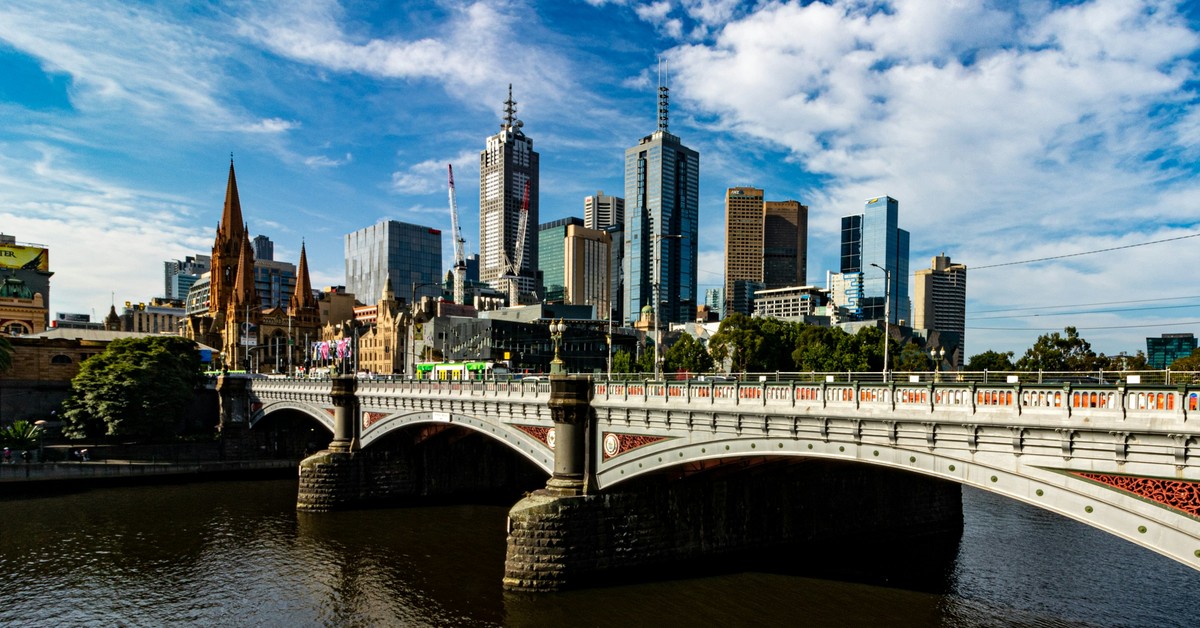

Every year, tens of thousands of Indian students choose Australia for a postgraduate or undergraduate degree, drawn by globally ranked universities, a multicultural student life, and post-study work rights that few competing destinations can match. But a course brochure rarely tells you the full picture: what a two-year degree actually costs once rent, health cover and everyday living are added in, how the student visa is actually assessed, and — the question most study-abroad content leaves out entirely — whether the qualification you choose actually helps you build a life in Australia beyond graduation.
This guide covers the full decision, from choosing Australia over the UK, Canada or Ireland, through entry routes, real cost modelling, the student visa process, and post-study work rights, to the part most competitors omit: which courses map cleanly onto Australia's skilled migration system, and how a study visa can become a genuine pathway to permanent residency.
Why Australia Over the UK, Canada or Ireland
Indian students comparing Australia against the UK, Canada or Ireland are usually weighing the same four variables: course quality, cost, post-study work rights, and the realistic chance of settling long-term. Australia holds up well on all four, which is why it consistently ranks among the top three destinations for Indian outbound students.
- Globally ranked universities across every major city, not concentrated in one region — eight of Australia's universities regularly appear in global top-100 rankings, spread across Melbourne, Sydney, Brisbane, Perth and Adelaide.
- Post-study work rights of two to four years through the Temporary Graduate visa (subclass 485), which is longer than many equivalent routes and is directly linked to your qualification level and course location.
- A points-tested permanent residency system where a skilled qualification and Australian study and work experience genuinely add to your score, rather than PR being available only through a small number of employer-sponsored routes.
- A large, well-established Indian and Malayali community in every major city, which matters for students moving from Kerala for the first time — from Melbourne's Dandenong and Clayton pockets to Sydney's Harris Park.
- A regional migration incentive structure: choosing a university outside Sydney or Melbourne can add extra points and open additional visa pathways later, something the UK and Ireland do not offer in the same structured way.
Where Australia is not automatically the better choice: the UK offers shorter one-year master's degrees that reduce total cost and time out of the workforce, and Canada has historically had a larger volume of PR-friendly programs through provincial nomination. If your priority is the fastest, cheapest degree with no interest in migrating afterward, a one-year UK master's may work out cheaper. If your priority is a genuine, assessed pathway toward long-term residency alongside a respected qualification, Australia's combination of course quality and skilled migration architecture is difficult to match. Our team compares your specific profile against all three destinations during a study-abroad counselling session rather than assuming one country fits everyone.
It is also worth being honest about where Australia asks more of an applicant than some competing destinations. A two-year master's costs more in total than a one-year UK equivalent purely on the extra year of living costs and OSHC, even where annual tuition is comparable. Visa processing and skilled migration criteria are also reviewed periodically, which means the exact points thresholds or occupation list entries that apply when you start your course may look somewhat different by the time you graduate and become eligible to apply. Neither of these is a reason to avoid Australia — they are reasons to build a plan with buffer and to revisit the migration side of your strategy again close to graduation rather than assuming today's settings will be unchanged two years later.
Entry Routes: After 12th, After Bachelor's, For Working Professionals
There is no single study in Australia for Indian students pathway — the right entry route depends entirely on where you are in your academic journey.
Straight After 12th Grade
Direct entry into an Australian bachelor's degree from Indian Class 12 is possible at most universities, provided your board and stream meet the specific entry score the university sets (this varies by institution and by course, particularly for competitive fields like law or medicine). Students who fall short of the direct-entry cutoff, or who come from a state board with lower recognised equivalence, typically complete a foundation year or diploma pathway program first, which then guarantees progression into year two of the bachelor's degree. See our dedicated guide on bachelor's degrees in Australia after 12th for the full comparison of direct entry versus foundation pathways.
After a Bachelor's Degree
This is the most common route for Indian applicants: a two-year master's degree (occasionally 1.5 years) taken immediately or a few years after an Indian bachelor's. Most Australian universities require a minimum aggregate — commonly in the 55-65% range for a standard master's and higher for competitive programs like business analytics or data science at Group of Eight universities — along with an English test score. Work experience is not usually mandatory for a standard coursework master's, though it strengthens MBA and some specialised applications considerably.
For Working Professionals
Applicants with several years of industry experience — engineers, accountants, IT professionals and nurses in particular — often have two options: a standard master's degree that refreshes and extends technical knowledge, or a professional program (an MBA, a Master of Professional Accounting, or a regulated program with a registration outcome) designed specifically around a career change or acceleration. For this group, the course decision should be made alongside a look at how the qualification will later be assessed for skilled migration points and which occupation list it maps to — a decision our course advice service is built specifically to work through.
A second decision working professionals often underweight is whether to study full-time or explore a program structure that allows part-time work alongside study from the outset. Student visa holders are generally permitted to work a capped number of hours per fortnight during the course, which helps offset living costs but is not, on its own, enough income to fund tuition. Building a realistic budget that treats part-time work as a supplement rather than the primary funding source avoids one of the more common financial stress points we see among first-semester students.
Eight Major Study Destinations and City Living Costs
Where you study in Australia affects your course options, your living budget and, in several cases, your migration points. Regional Australia — a formal migration category that includes Adelaide, Perth, Brisbane, the Gold Coast and Hobart, but excludes Sydney and most of Melbourne — carries extra points and additional visa options for graduates who study and later work there.
- Melbourne — Australia's largest student city, strong in business, IT and the arts, with the country's biggest Malayali and broader Indian community.
- Sydney — the financial and corporate capital, with the widest range of internship and part-time work opportunities alongside the highest living costs.
- Brisbane — growing fast in engineering, health sciences and technology, with a lower cost base than Sydney or Melbourne and regional migration benefits.
- Adelaide — increasingly popular for health, IT and agritech courses, with some of the country's most affordable living costs and strong regional visa incentives.
- Perth — closer to India by time zone, strong in mining, engineering and health, with a compact, manageable cost of living.
- Canberra — a smaller, campus-focused city built around the Australian National University, strong for public policy, IT and research-heavy degrees.
- Gold Coast — a coastal, regional-classified city strong in hospitality, health and tourism-adjacent courses, with regional visa perks.
- Hobart — Australia's most affordable major study city, strong in marine science and agriculture, and fully regional for migration purposes.
For a personalised comparison of universities and cities against your specific course and budget, our team maps this out during university application processing, factoring in which cities carry regional migration advantages for your target occupation.
The Real Cost of Studying in Australia: Tuition, OSHC, Living, Visa
Most course pages quote tuition alone, which understates the real annual cost by a wide margin. A realistic budget has five components: tuition, Overseas Student Health Cover (OSHC), living costs, the student visa application charge, and course materials. All figures below are indicative ranges only — universities revise tuition annually and visa charges are set by the Department of Home Affairs, so always confirm the current number before committing funds.
Tuition Fees
Postgraduate tuition varies enormously by field and institution — a standard coursework master's in business, IT or the humanities generally sits in a lower band than a specialised program such as an MBA, a Master of Business Analytics at a Group of Eight university, or a regulated professional degree like physiotherapy or pharmacy, which carry accreditation and placement costs. As a rule of thumb, expect postgraduate tuition to run into the tens of thousands of Australian dollars per year — always confirm the exact figure on the university's own fee schedule for your intake year, since fees typically rise 3-6% annually.
Overseas Student Health Cover (OSHC)
OSHC is mandatory for the full length of your student visa and is usually purchased for the course duration in one instalment, or annually. It covers basic medical and hospital costs and is a fixed, comparatively small line item next to tuition and rent.
Living Costs
The Department of Home Affairs sets an indicative minimum living cost figure that student visa applicants must demonstrate they can meet — this figure is reviewed periodically and should always be checked directly on the Department of Home Affairs website or ImmiAccount rather than assumed from an older source. Actual spend depends heavily on city (see the destination comparison above) and living arrangement — shared student accommodation costs noticeably less than a private studio in central Sydney or Melbourne.
Student Visa Application Charge
The subclass 500 visa carries a government application charge that is revised periodically. Treat any number you see online as indicative until you check the current fee on the official visa fee schedule at the time you lodge.
Two-Year Worked Total
For a typical two-year postgraduate degree, once tuition, OSHC, living costs and the visa charge are added together across both years, most Indian students should plan for a total investment in the AUD 80,000-140,000 range as a broad planning band — the wide range reflects the gap between a standard business or IT master's at a mid-ranked university in a regional city, and a specialised or Group of Eight program in Sydney or Melbourne. Our team builds a course-specific, city-specific cost model during your first study-abroad counselling session so the number you plan around is not a generic average.
Student Visa Subclass 500 and the Genuine Student Requirement
Nearly all international students enter Australia on the subclass 500 student visa. The core documentary requirements — a Confirmation of Enrolment, evidence of English proficiency, OSHC, and proof of funds — are well publicised, but the requirement that causes the most refusals is less understood: the Genuine Student (GS) requirement, introduced to replace the older Genuine Temporary Entrant test.
The GS requirement asks a case officer to assess whether your circumstances genuinely support a temporary stay to study, considering your current situation in India, your reasons for choosing this specific course and provider, your knowledge of the course and what it leads to, your immigration history, and any information provided by the institution itself. It is an assessed judgment, not a checklist — which is precisely why applications get refused even when every document is technically in order.
Where Genuine Student Refusals Actually Come From
- A weak or generic statement of purpose that could apply to any course at any university, with no connection between the applicant's academic or work background and the chosen program.
- A course or provider that does not logically fit the applicant's profile — for example, a mismatch between prior qualifications and an unrelated postgraduate specialisation, with no explanation offered.
- Financial evidence that is inconsistent with the stated funding source, or funds that appear suddenly in an account shortly before the application without a credible paper trail.
- Signals that suggest the primary intention is migration rather than study — this does not mean mentioning future career plans is disqualifying, but the application needs to show the course itself has genuine value, not just the visa outcome that might follow it.
Because the GS requirement is assessed holistically, the strongest applications are prepared with the full picture in mind from the start — course selection, financial documentation and the statement of purpose built as one coherent narrative rather than three separate tasks. Our visa application assistance service and initial study-abroad counselling are structured around exactly this. For the full official requirement, see the Department of Home Affairs and Study Australia websites. A dedicated deep-dive on this requirement is available in our student visa Genuine Student guide.
Post-Study Work Rights: The 485 Visa by Qualification Level
The Temporary Graduate visa (subclass 485) is what turns an Australian degree into genuine work experience rather than just a qualification on paper. It allows eligible graduates to live and work in Australia temporarily after completing their course, and its length is directly tied to the qualification level and, in some cases, the region where you studied.
- Bachelor's degree graduates are generally eligible for a shorter post-study work period than postgraduate qualifications.
- Master's (coursework) graduates typically receive a longer post-study work period than bachelor's graduates.
- Master's (research) and PhD graduates are generally eligible for the longest post-study work periods, reflecting the research contribution of the qualification.
- Graduates of eligible regional campuses can access additional post-study work rights on top of the standard entitlement tied to their qualification level, reinforcing why the city and campus choice covered above matters financially as well as for lifestyle.
Because settings and exact durations are reviewed periodically by the Department of Home Affairs, always confirm the current 485 visa duration for your specific qualification level and campus location before finalising a course choice. Our detailed breakdown of how this visa works end-to-end, including how it connects into permanent residency, is covered in From Student to PR: The 485 Graduate Visa Route — read this alongside your course shortlist, not after you have already accepted an offer.
The Part Most Competitors Omit: Which Courses Actually Lead to PR
Most study-abroad content stops at admission and visa lodgement. What it rarely addresses is the question that matters most for a student who wants to build a long-term life in Australia: does this specific degree connect to an occupation that Australia's skilled migration system actually wants? This is the core differentiator in how One Doorway International approaches course selection — every course recommendation is checked against the migration outcome, not just the admission outcome.
Start With the Occupation List, Not the Course Brochure
Australia's skilled migration program is built around occupation lists — most importantly the Medium and Long-term Strategic Skills List (MLTSSL) and the Short-term Skilled Occupation List (STSOL) — which determine which visa subclasses and which points-tested pathways an occupation qualifies for. A course that does not lead to an occupation on these lists may still be a good education, but it will not, on its own, support a skilled migration application later. Our companion guide, Australia's Occupation Lists Explained, walks through how these lists work and how they are updated.
Fields That Consistently Map to Skilled Migration
- Information and communications technology — software engineering, data science and cybersecurity graduates generally require a skills assessment through ACS and align to consistently in-demand ICT occupations. See our dedicated guide on Masters in Computer Science in Australia.
- Accounting and finance — a Master of Professional Accounting, taken alongside CPA Australia membership, aligns to accountant occupations that have historically been in strong demand. Covered in Master of Professional Accounting in Australia.
- Engineering — mechanical, civil, electrical and other engineering specialisations generally require a Competency Demonstration Report assessed by Engineers Australia. See CDR for Engineers and Master's in Mechanical Engineering.
- Nursing and allied health — regulated professions such as nursing, physiotherapy and pharmacy require registration with the relevant Australian board (AHPRA for nursing) and have consistently sat on skills-in-demand lists. See Master of Physiotherapy in Australia and Master of Pharmacy in Australia.
- Social work and psychology — regulated pathways with defined accreditation bodies, covered in Master's in Social Work and Psychology.
Fields Where the Migration Case Needs More Care
General business degrees, an MBA without a specialisation tied to a specific occupation, and some humanities and creative fields do not map as directly onto occupation lists. This does not mean they are the wrong choice — many students study these fields for genuine career reasons unrelated to migration, and pathways like state or employer sponsorship can still apply. It means the migration plan needs to be built more deliberately rather than assumed. Our MBA in Australia guide covers exactly how to think through this for management-track qualifications.
How the Pathway Actually Runs
- Complete your course and become eligible for the subclass 485 Temporary Graduate visa, giving you time to work in Australia in your field.
- Undergo a skills assessment relevant to your occupation (bodies vary by field — for example ACS for ICT roles, Engineers Australia for engineering, or the relevant health board for regulated professions).
- Sit or provide evidence of the required English test score, since English proficiency directly affects your points score.
- Have your points calculated under the points test — Australian study, your age at the time of application, your English score and your skills assessment outcome all contribute.
- Compare your points and occupation against the subclass 189, 190 and 491 visa options to identify the most realistic route, factoring in whether state nomination improves your case.
None of this guarantees a migration outcome — every application is assessed on its own merits against the criteria current at the time you apply, and occupation lists and points requirements change. What a course-and-migration-aware plan does is stop you from investing two years and a significant sum into a degree that was never going to connect to a PR pathway in the first place. This is the single biggest gap our clients tell us they found in generic study-abroad advice.
Scholarships and Education Loan Assistance
Scholarships materially change the cost equation covered above, and Indian students frequently under-apply simply because they do not know a relevant scholarship exists for their course or university.
- University-specific scholarships — most Australian universities offer merit-based tuition reductions for international students, often applied automatically at offer stage or through a short additional application.
- Destination Australia and similar government-linked programs support students at regional campuses, reinforcing the cost and migration advantages of studying outside Sydney and Melbourne.
- Course-specific and faculty scholarships, particularly in STEM, health and research degrees, where universities are actively competing for strong international applicants.
Our scholarship assistance service identifies which of these you are realistically eligible for before you finalise a university shortlist, since scholarship deadlines often fall earlier than the course application deadline itself. For students funding the balance through a loan, our overseas education loan assistance service works with lenders experienced in Australian study loans specifically, which reduces back-and-forth on collateral and sanctioning timelines.
Intakes, Deadlines and a 12-Month Application Calendar
Australian universities run two main intakes — February/March (Semester 1) and July (Semester 2) — with a smaller November intake at some institutions for select courses. Working backwards from your target intake protects you from the two most common timeline mistakes: applying for a course after its intake has closed, and lodging a student visa too close to the semester start date to allow normal processing time.
- June to August: shortlist courses and universities, and sit IELTS or PTE if you have not already.
- September to October: submit applications for the following February intake; most universities process offers within a few weeks.
- November to December: accept your offer, pay the deposit, and finalise proof-of-funds documentation.
- January to February: lodge your subclass 500 visa application well ahead of your course start date.
- February or July: semester begins, with pre-departure and arrival support arranged in the weeks before.
This timeline compresses for July intakes and stretches out further for competitive, quota-limited programs such as some Group of Eight master's degrees. Our pre-departure support and university application services are built around exactly this calendar so nothing is left to the last few weeks before a deadline.
Other Popular Programs Indian Students Ask About
Beyond the fields covered above, three other programs come up often enough with our Kerala-based applicants that they deserve a direct mention here, each with its own detailed guide.
- Master of Business Analytics — a fast-growing choice for commerce and engineering graduates, sitting between a traditional MBA and a technical data science degree. We cover the honest ROI picture, not just the marketing, in Master of Business Analytics in Australia: Is It Worth the Fees.
- Study Medicine (MBBS-equivalent) in Australia — a long, highly competitive and expensive pathway for Indian students that requires realistic expectations from the outset. See Studying Medicine in Australia for Indian Students.
- PhD in Australia — often the most cost-effective postgraduate route for genuinely research-oriented students, since many PhD places carry fee waivers or stipends. Read PhD in Australia: Funding and Supervisors before assuming a doctorate is out of reach financially.
If your intended field is not covered by name in any of the guides linked throughout this page, that does not mean it lacks a migration pathway — it usually means the occupation mapping needs to be checked individually against the current MLTSSL and STSOL lists. This is exactly the kind of check our course advice service is built to do before you commit to an application.
Do You Need an Australia Education Consultant, and What Should You Check?
It is entirely possible to apply to an Australian university and lodge a student visa independently, and many well-prepared applicants with a straightforward profile do exactly that. Where Australia education consultants earn their fee is in the parts of the process that are hardest to see from the outside: matching a course to a realistic migration outcome, building a Genuine Student narrative that holds together under scrutiny, and catching a documentation gap before a case officer does rather than after a refusal.
This matters most for two groups of applicants. First, working professionals and postgraduate applicants whose case needs to connect a specific course to a specific occupation on the current skills-in-demand list — get this wrong and you can spend two years and a significant sum on a degree that does not support the migration plan you actually wanted. Second, students whose academic record, gap years, or financial documentation is not straightforward, where the Genuine Student assessment needs more careful framing than a template statement of purpose can provide.
What to Check Before You Choose One
- Is the consultant, or the individual advising you, actually registered with MARA? A migration licence is a legal requirement to give immigration advice in Australia — an education agent without one can help with university applications but cannot legally advise on the visa or migration strategy.
- Does the consultant have a presence in Australia itself, not only in India? An on-ground office in the city you are moving to matters once you land, not just before you leave.
- Does the advice connect the course to a migration outcome, or does it stop at the offer letter? The gap between these two is exactly the differentiator covered throughout this guide.
- Is the fee structure transparent, with services like scholarship assistance, university application processing and pre-departure support clearly scoped rather than bundled vaguely?
One Doorway International is a MARA-registered migration agency with an on-ground Melbourne office in addition to our Kerala teams — a combination most local education agents in Kottayam, Kochi or across Kerala do not offer. Every course recommendation we make is checked against both the admission criteria and the current migration framework, which is the entire premise of this guide.
Conclusion: Build Your Study Plan Around the Outcome You Actually Want
A degree from Australia is a genuinely strong investment when the course, city and visa strategy are chosen together rather than in isolation. Whether you are exploring study opportunities in Australia broadly or have already narrowed things down to one or two universities, the students who get the most out of the experience are rarely the ones who picked the highest-ranked university in the abstract — they are the ones whose course choice, city choice and post-study plan were assessed against their own profile and their own goals from day one.
As a MARA-registered migration agency with an on-ground Melbourne office alongside our Kottayam and Kochi teams, One Doorway International is positioned to support you on both sides of this decision: the admission and visa process, and the longer skilled migration plan that follows it. Book a free study-abroad counselling session through our contact page to get a course-and-cost plan built around your specific profile, not a generic estimate.